(713) 853-9881

How to remove hard water stains from sinks, showers and toilets
Hard water is a part of living in the Houston area. But shower scale and rust stains are not something you have to live with. We’ll explain how to help return the sparkle back in your home’s fixtures.
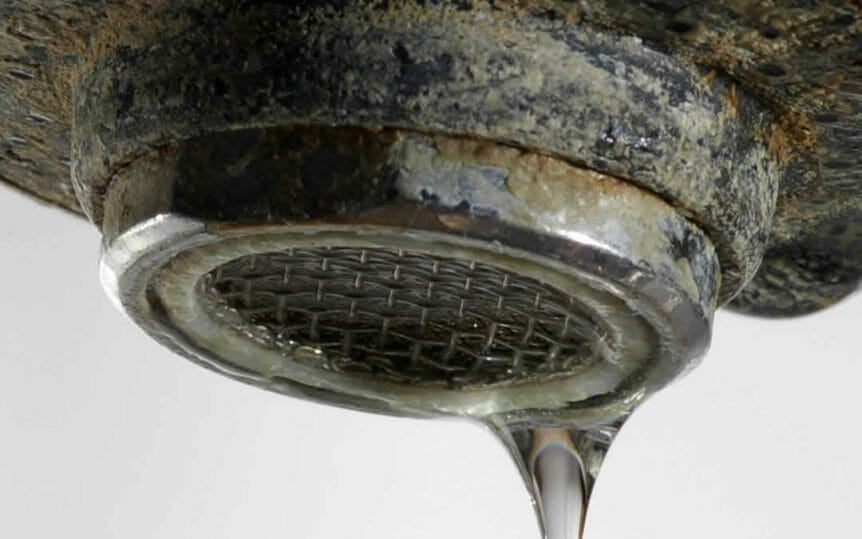
But first, why does hard water cause these stains in the first place? The large amounts of calcium, magnesium, and iron that are found in Houston’s hard water are to blame. These minerals attach to and form a hard scale on nearly every surface they come into contact with. The white scale on your faucet spout is caused by a buildup of calcium and magnesium particles. Rust stains form when high levels of iron particles combines with air, and the tough, sticky grey soap scum in your shower occurs when your soap combines with body oils and the calcium and magnesium particles in the water. Yuck!
A whole home water softener, descaling and filtration system from John Moore helps prevent much of these stains by addressing the cause of the problem itself – the hard water. But until then, here are some suggestions to address hard water stains.
Removing scale on fixtures
 For an all-natural solution, soak a rag in white distilled vinegar. Place the rag directly on the fixture and let it sit for an hour. Remove the rag and scrub the loosened scale with a sponge or something that won’t scratch your fixture. Repeat as needed. Another strategy is to cover the fixture in a paste made of three parts baking soda and one part water, let sit, and wipe clean. To remove thick buildup, consider using a product designed to fight mineral buildup such as Lime-A-Way after reading the label completely.
If scale has built up on your faucet’s aerator screen, turn the spout tip counterclockwise to unscrew it and access the screen. Soak the screen in vinegar, then scrub with a toothbrush to dislodge any remaining deposits. Rinse the screen with water and then screw it back onto your spout.
Removing rust stains in toilets
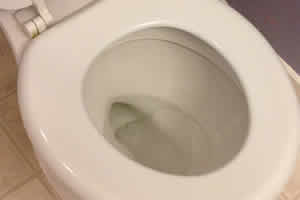 If the rust stains have been visible for a while or keep coming back, they may not be able to be removed. This is because over time, the rust actually etches the surface of the porcelain. Otherwise, here are some methods to try. For an eco-friendly clean, try scrubbing with lemon juice with salt.
If your stains are more stubborn, choose a cleanser with a high amount of hydrochloric acid, which is sometimes listed as HCL, hydrogen chloride, or muriatic acid on product labels. This is an aggressive cleanser and should be used with protective gloves and caution taken to prevent splatters onto tile or rugs. It is not recommended for septic systems. Make sure that your product does not contain bleach, as bleach will react with the rust stain and set the stain.
A word of caution:
Do any tank drop-in type cleaners you may be using contain bleach? If so, remove the dropin from your tank and flush the toilet several times to remove the bleach residue. Bleach and hydrochloric acid can cause deadly vapors if combined.Next, turn off the water shutoff valve for your toilet and plunge out as much water as possible from the bowl. This will allow the maximum amount of cleanser to be on the porcelain. Gloves on, apply the cleaning product with a stiff nylon and plastic toilet brush. Scrub slowly to prevent the cleanser from splattering. Address any splatters immediately if they occur by wiping and rinsing the affected area. Once scrubbed, turn the water back on and flush and rinse the bowl immediately.
Removing soap scum from showers
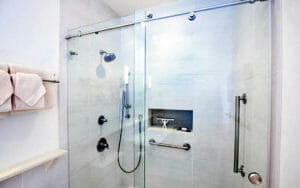 For lighter amounts of soap scum, reach for white vinegar and baking soda. Sprinkle a large amount of baking soda onto a sponge, dampen with water or white vinegar and scrub. The acidity in the vinegar should help to break down the soap scum. For tougher buildups, a non-abrasive, over the counter cleanser containing bleach is your best bet to cut through the soap scum. Spray on, wait a few minutes (as directed by the label), then scrub with a non-scratch, nylon scrubbing pad. Using an old toothbrush or grout brush to remove deposits in the grout lines, will keep your shower cleaner longer. Rinse your shower thoroughly to remove all of the cleaner, then squeegee the walls from top to bottom to remove as much water as possible.
Once your bathroom is sparkling again, frequent cleaning is key. By wiping down faucets and sinks daily, less water spots form. Using a squeegee on the walls after showering helps prevent soap scum buildup. A daily swish of the toilet brush, prevents most stain growth from occurring. If the upkeep gets to be too much, call John Moore for a no-obligation estimate for a water softener, filtration and/or descaling solution for your home.
